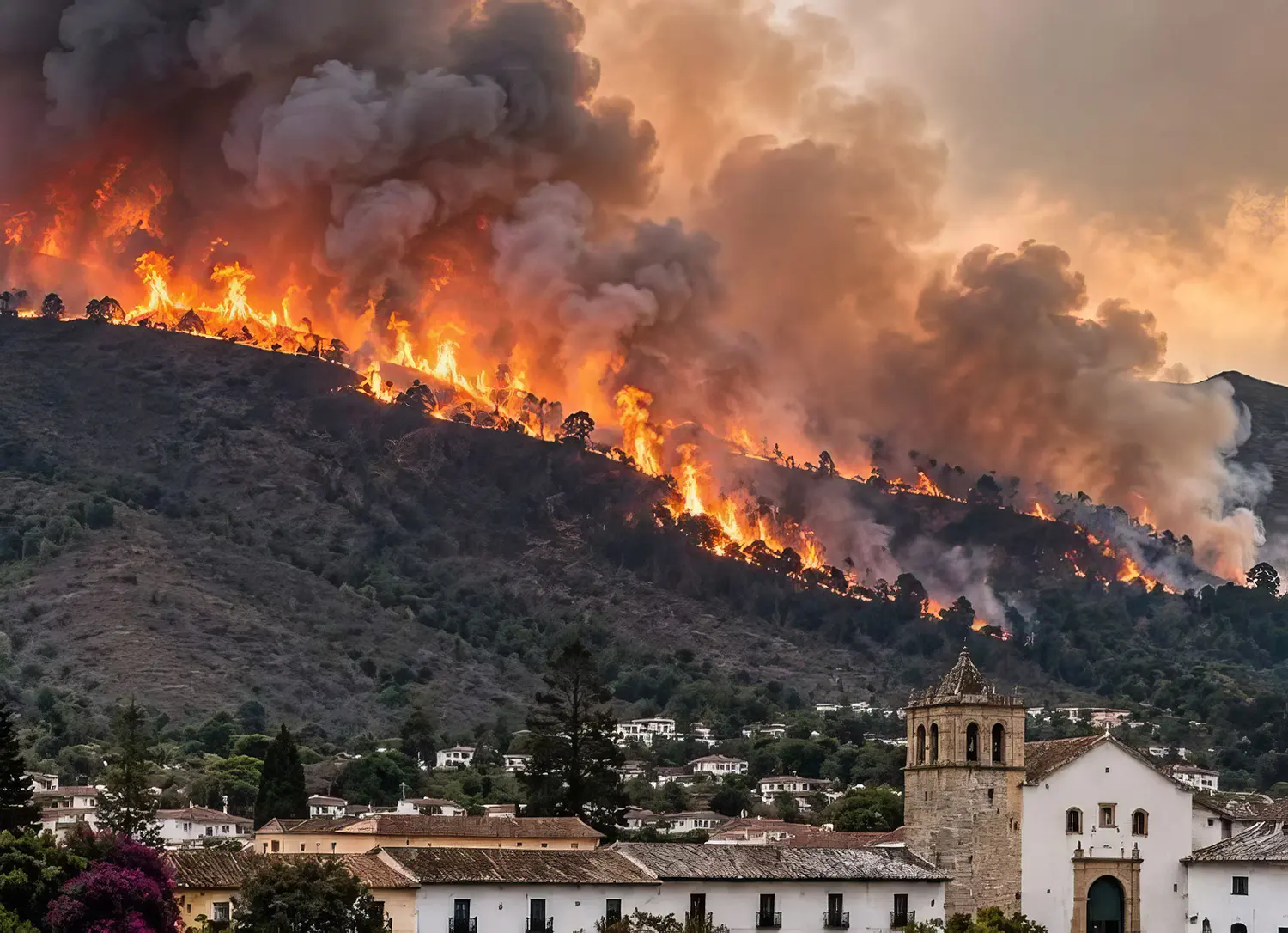
AI on the Fire Line
A non-profit system for the people who fight wildfires in Villa de Leyva: verified alerts for the public, and safer, better organized crews on the line.
I have lived in Villa de Leyva for ten months. I had never been through a wildfire before moving here, and I have already gone out to help at five. The community is organizing itself to face them, and this project is a response to that impulse.
Today the information lives in a WhatsApp group where fire reports get lost among unrelated conversations. The idea is to use AI to read that group and bring order to it. A report opens an unverified item. Once enough people confirm the fire, a low-urgency alert reaches everyone with the app, and it can also notify the fire department and other responders. If the fire continues, admins can call for help, and brigadistas and volunteers, already organized in crews, receive everything they need to respond.
Anyone who responds can check in and share their location every 15 minutes or so, enough to know where people are on lines 1, 2 and 3 without draining their phones. Their emergency medical information is there if it is needed. When the session ends, the app works a bit like Strava, with distance, elevation and other stats to share, which gives volunteers one more reason to use it.
For now this is only the idea. I will keep this page open and update it as the project takes shape.
Day 1
November 4, 2026. I wrote the idea down, published this page. These are the my first thoughts:
The first obstacle
Everything starts with reading a WhatsApp group, and that turned out to be the hardest part. The official groups API requires an Official Business Account. Unofficial tools connect quickly, but they can get the account banned, so they only work for a prototype. A safety system can't depend on that.
WhatsApp also doesn't allow AI to be the main function of a service on its business API, though it can be part of a broader one. An alert system should fit, but I need to confirm it.
The plan
1. Validate with the community. Talk to admins and brigadistas, and define who activates each alert.
2. Test the reading. Export the chat from a past fire, with the group's knowledge, and measure whether the AI can detect reports and group them by fire.
3. Build a panel for admins. Unverified fires, who confirmed them and a manual button to activate the alert.
4. Build the mobile app. Alerts, “on my way”, crews and location every 15 minutes.
5. Run a drill with one crew, before adding the Strava-style stats.
What can't fail
A person decides. The AI suggests, but a human activates the call for brigadistas, and the app doesn't replace calling the fire department, because the AI can also miss a report.
It has to work without signal. On the mountain the connection can drop, so the app must store each location and send it when it reconnects.
The data is sensitive. Medical information and live location need explicit consent and a review of Colombia's data protection law.
How I will build it
Claude Code writes the app, and a Claude model reads the messages. For planning I will use the Elephant-Goldfish Model, an open-source workflow from Google. One agent knows the whole project and writes the plan, several agents with no context try to break it, and I make the final calls. For something that could fail during an emergency, I want the plan torn apart before anything gets built.
Next
Talk to the community, then test the AI on a real chat from a past fire.